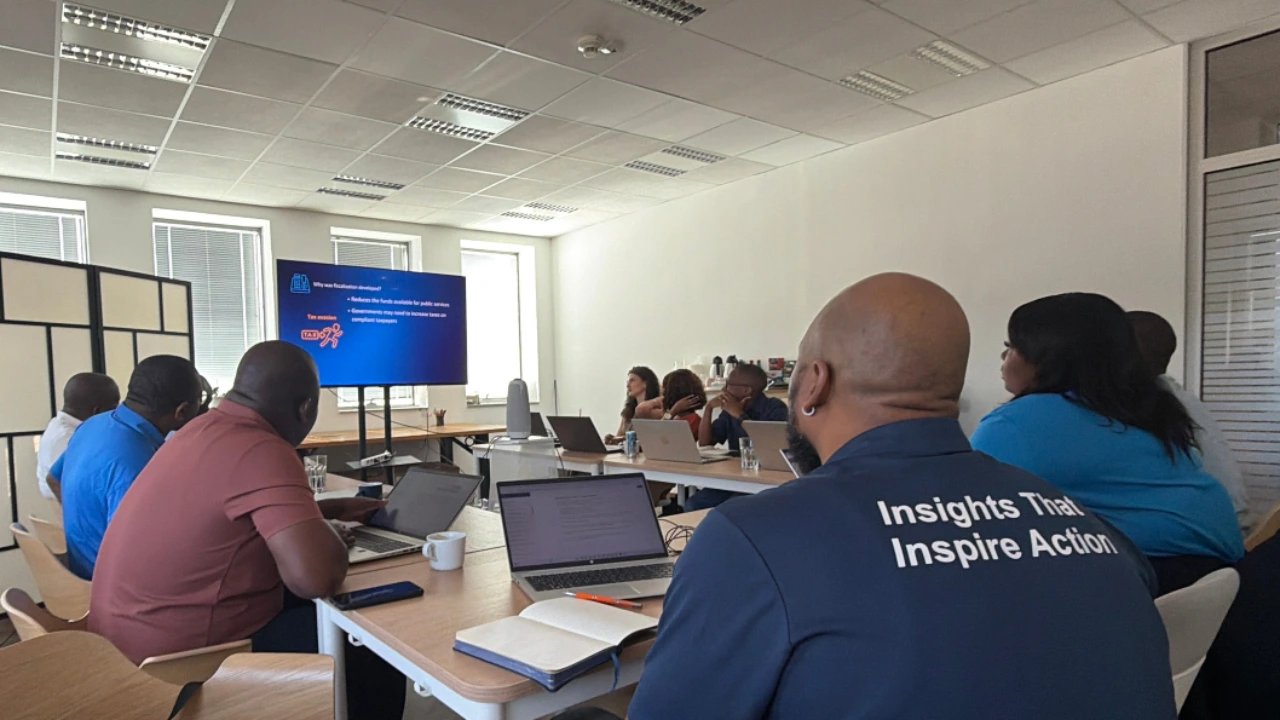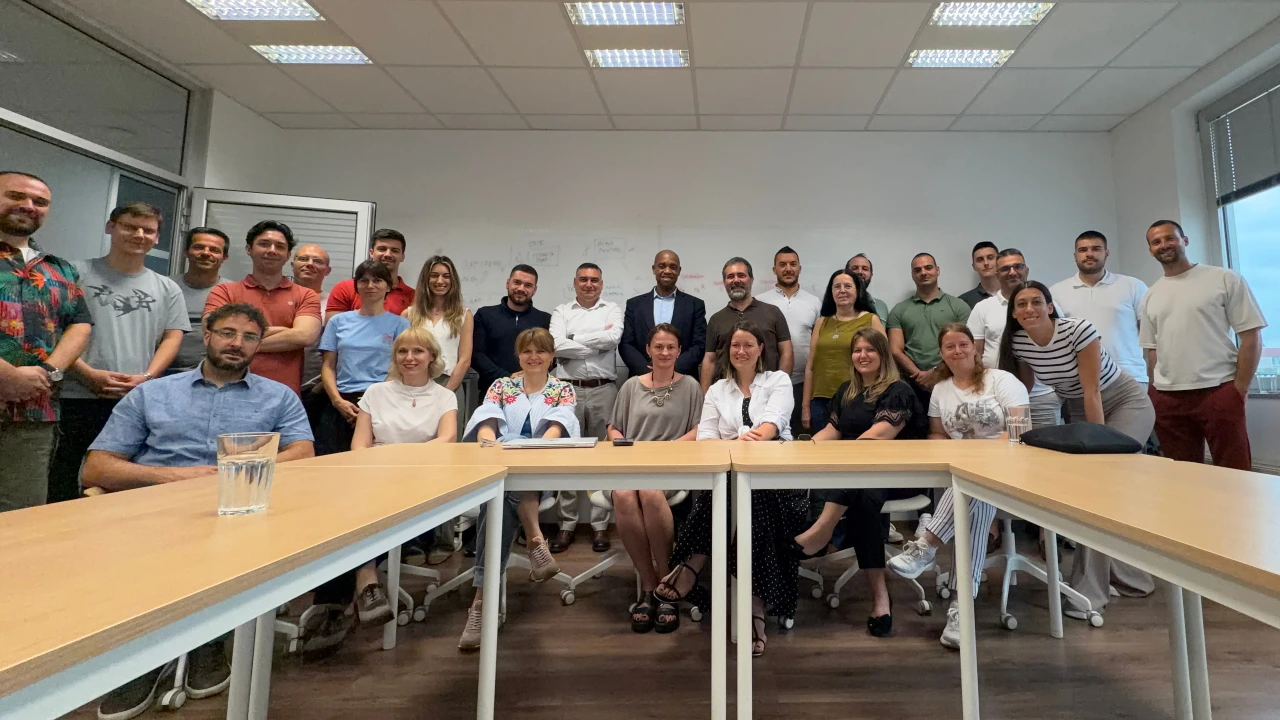

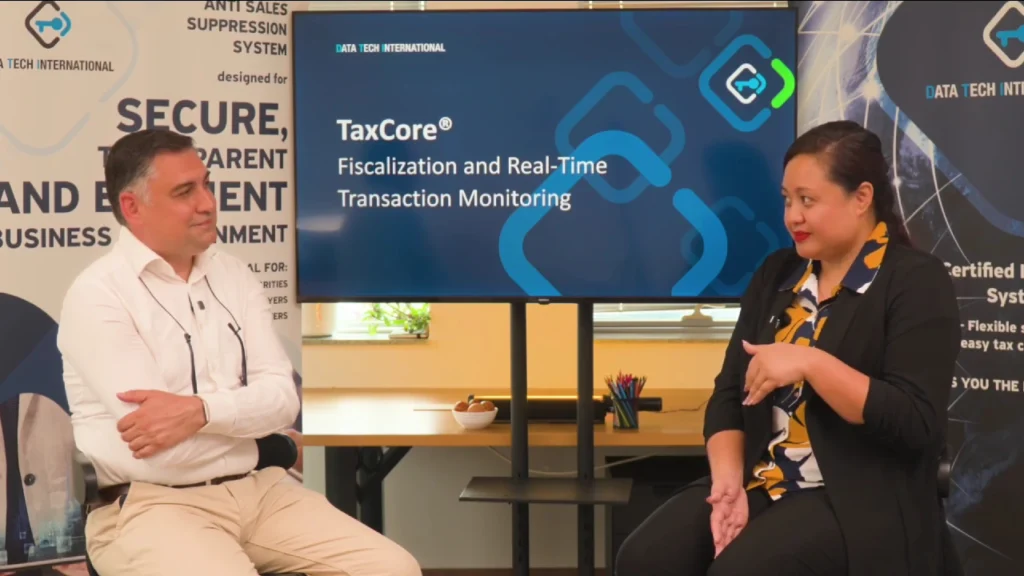
Data Tech International had set foot on Samoan soil many times, yet this is the first time Pacific found its way to it. In the heart of Belgrade, at the headquarters of DTI, Goran Todorov, company’s CEO, welcomed Theresa Kyoto Amosa, a leader whose strong determination had changed tax collection in one of the world’s most remote island nations. What began as a conversation half a world away six years earlier had blossomed into a remarkable story of resilience or rather how Samoa tax revenue growth nearly doubled.
In 2020, as Covid-19 slammed borders shut and governments slashed budgets, Amosa’s team at Samoa’s Ministry of Customs and Revenue launched the Tax Invoice Monitoring System (TIMS) built on DTI’s TaxCore. Many doubted whether digital fiscalization could thrive in a cash-based economy. Today, the numbers tell a different tale: revenue collection has nearly doubled.
Todorov leaned forward, his tone warm yet incisive. “Theresa, welcome to Serbia. We are so pleased to have you here.” He wanted to revisit the heart of the matter, the revenue impact. “You implemented TIMS right at the outbreak of Covid-19. You mentioned it had a measurable effect. Was that impact immediate, or did it build over time? When exactly did you begin to see revenue grow?”
Amosa answered without hesitation, her voice steady with hard-won insight. “We launched in 2020 amid economic uncertainty and fiscal pressure. In terms of revenue growth, we started noticing it around two to three years after implementation.” But something far more telling happened first.
5 Conclusions on Samoa Tax Revenue Growth
- Deterrence Beats Enforcement: Simply knowing the TIMS powered by TaxCore was watching changed taxpayer behaviour immediately. Samoa’s Parliament cut revenue targets by 10%, yet collections dropped only 1% in the first year of COVID, proving anticipation of visibility drives compliance more powerfully than penalties.
- People First, Technology Second: With over 6,000 taxpayers and just ten auditors, success came from cultural sensitivity. Amosa’s team used everyday Samoan language, offered free smartphone POS apps, and personally advised businesses before purchases, turning confusion into cooperation.
- Flexibility Wins Vendor Challenges Instead of rushing penalties, the ministry showed patience with slow or expensive vendors. Creative workarounds, like manual tablet loading for major taxpayers, kept businesses compliant while DTI helped ensure fair pricing.
- Real-Time Data Transforms Auditing: TIMS eliminated months-long manual checks. Auditors now compare live TaxCore data against declarations, quickly catch under-reporting, calculate liabilities for non-filers, and shift the burden of proof to taxpayers.
- Cultural Understanding Drives Lasting Success: Amosa wouldn’t change a thing: respecting Samoa’s cash-based culture and close-knit community was essential. The result? Nearly doubled revenue in five years, with plans for pre-filled returns and full automation built on strong public-private trust.
The Power of Anticipation
Before the numbers climbed, a subtle shift transformed behaviour. Taxpayers realized their sales would now stand visible and monitored. That awareness alone changed how they declared income.
“There was a behavioural change, a deterrence effect,” Amosa explained. “Just the taxpayers’ anticipation that their sales would be more visible really changed their behaviour in terms of declaring the right amount of sales.”
Samoa’s Parliament had braced for disaster, cutting the ministry’s revenue targets by 10 percent. Instead, core taxes collected by Inland Revenue Services fell by only one percent. Amosa’s eyes lit up with quiet wonder as she recalled the moment. “Can you believe that? The system had not even needed to catch anyone. The mere knowledge that it was watching proved enough.”
This early deterrence bought precious time. Real, sustained Samoa tax revenue growth followed. By the five-year mark, the ministry collected nearly double what it had before TIMS. The technology worked, but only because people embraced it.
The Human Side of Digital Transformation
Seasoned tax officials know the truth: technology is never the hardest part, people are. Samoa counts more than 6,000 taxpayers, but its audit team numbers barely over ten. When TIMS went live, business owners felt bewildered. Would they need expensive new equipment? What if their point-of-sale systems failed? What if they lacked reliable internet?
Amosa’s team responded with pragmatism and deep cultural understanding. They translated complicated requirements into clear, everyday Samoan. They created awareness materials that matched accredited solutions to specific industries. Most importantly, they invited taxpayers to talk before buying anything.
“The last thing we need is a wrong path,” Amosa said. Her team even offered a free POS application that worked on smartphones and tablets.
Todorov listened with clear admiration. “You really went the distance to consult taxpayers about what they need to do. In many other countries, especially with larger taxpayer bases, this is not a practice tax authorities would follow.”
Amosa nodded. “We always encourage them, before they actually purchase an EFD, to come and talk to us to make sure they are on the right path.” She smiled at the memory. “We translated it into simple everyday language using our own Samoan language just to explain to them that it’s nothing completely new. To them, it’s all about finding the right solution.”
In a close-knit island nation where relationships matter, this personal touch proved fundamental. It turned potential resistance into cooperation.
Overcoming the Vendor Bottleneck
Taxpayers formed only half the challenge. Vendors supplying electronic fiscal devices created another persistent hurdle. Some quoted “ridiculously high prices” for accreditation. Others moved slowly, especially when Samoa represented just one small client.
Lacking in-house developers, the ministry relied on DTI’s expertise to judge whether costs were fair. One memorable case involved one of Samoa’s top ten taxpayers. Their unique system had no other users in the country, and the overseas vendor showed little urgency to certify compliance.
Amosa found a practical solution. The business installed tablets running the web invoicing app and loaded products manually while awaiting full integration. “We managed to load their products onto these tablets,” she recalled. “The tablets were provided by the taxpayer, so that was evidence that they were willing to comply. It’s just that the vendor support was causing the delay.”
Double entry created temporary inconvenience, but it kept the business compliant. When Todorov asked about possible collusion between taxpayers and vendors, Amosa shook her head firmly. “No, I wouldn’t say so. I think in a lot of the cases, it came down to delays from the vendors.”
The ministry chose patience over punishment. “We were actually very flexible,” Amosa noted. “Yes, there are penalties in the legislation, but we were not quick to apply these penalties because we wanted to first make sure that we exhausted all avenues to facilitate compliance.”
Samoa Tax Revenue Growth: Data That Sees What Eyes Cannot
Before TIMS, auditors worked largely in the dark. Self-assessed declarations often took months, or more than a year, to verify. Now, evidence flows in real time. At the end of each VAT/GST period, the ministry runs a tax-charged report on TaxCore and compares it directly against taxpayer declarations.
“There has been a lot of cases of under-reporting,” Amosa admitted candidly. Discrepancies emerged quickly. At first, officials simply asked businesses to pay the difference. When patterns repeated, penalties followed.
Todorov observed how the system removed the need for physical visits. Amosa agreed wholeheartedly. “Now, with TIMS, our team and our staff don’t need to go out and try to look for it; the evidence is right there. The responsibility falls on the taxpayer to come and explain this discrepancy.”
The system also tackled non-filers elegantly. Previously, officials made default assessments by comparing similar businesses. Today, data arrives directly from transactions as they happen. “Even if they don’t declare their tax returns,” Amosa explained, “because you’ve got that data transmitted directly from the source… you can make immediate calculations on their tax liability.”
The Public Becomes Partner
No system is entirely cheat-proof. Fraudulent QR codes sometimes appeared as “weird looking characters” on receipts. The ministry deployed mystery shoppers and launched television campaigns to raise awareness.
Most powerfully, ordinary citizens began reporting violations. “We actually have members of the general public reporting to us,” Amosa said with evident satisfaction, “saying, ‘I went to this store, I know they’re supposed to give me a physical invoice, but I got nothing instead.’”
Officials considered whistleblower rewards but paused due to conflict-of-interest concerns in such a small administration. They continue seeking the right approach.
Samoa Tax Revenue Growth: A Future of Automation and Understanding
Six years on, the journey continues. The ministry now pursues deeper integration between TaxCore and its core revenue management system. The vision includes pre-filled returns, automated calculations, and far less manual work.
“We want to automate as much as possible and reduce the risk of human error,” Amosa said. “We want to free up the staff from having to do that manual work and for them to focus more on value-added work, just analysing the data and identifying case studies.”
Todorov asked whether the ultimate aim involved presenting taxpayers with a clear bill of sales and purchases. “Yes!” Amosa replied enthusiastically. She emphasised alignment with broader goals of public-private partnership and cultural sensitivity.
When asked if she would change anything about the rollout, Amosa remained resolute. “I wouldn’t do anything different. When you’re introducing fiscalization to a small island nation that was highly cash-based, you have to really factor in the culture of the taxpayers.”
Todorov concluded with genuine warmth, gesturing around the Belgrade headquarters that had supported this transformation. “Theresa, it’s been a wonderful journey for these past six years. We have supported your ministry throughout all this time, and we are looking forward to the future, to get to the point where you become maybe one of the first world’s fully automated tax administrations.”
Amosa smiled. “The challenge is to collect the good data. You have the good data. Now we need all the other things that are maybe expensive but worth it.”
Samoa’s fiscal innovation continues, yet its lessons already resonate far beyond the Pacific. Advanced technology opens the door, but human understanding, flexibility, patience, and cultural respect, ushers people through it. In an age of ambitious digital promises, this small island nation has shown that lasting compliance grows not from threats, but from trust. The Pacific may lie far away, but its example now travels the world.