
For most people, tax is a matter of arithmetic. You earn, you spend, you file, you forget. But beneath that mundane rhythm lies a different war. On one side sit businesses, many of them honest, some of them not. On the other side, governments collect what they are owed without strangling commerce in the process. And in the middle, for decades, there has been a dirty secret. The cash register has always had a blind spot. And this is how we get to the center of today’s topic, tax fraud prevention!
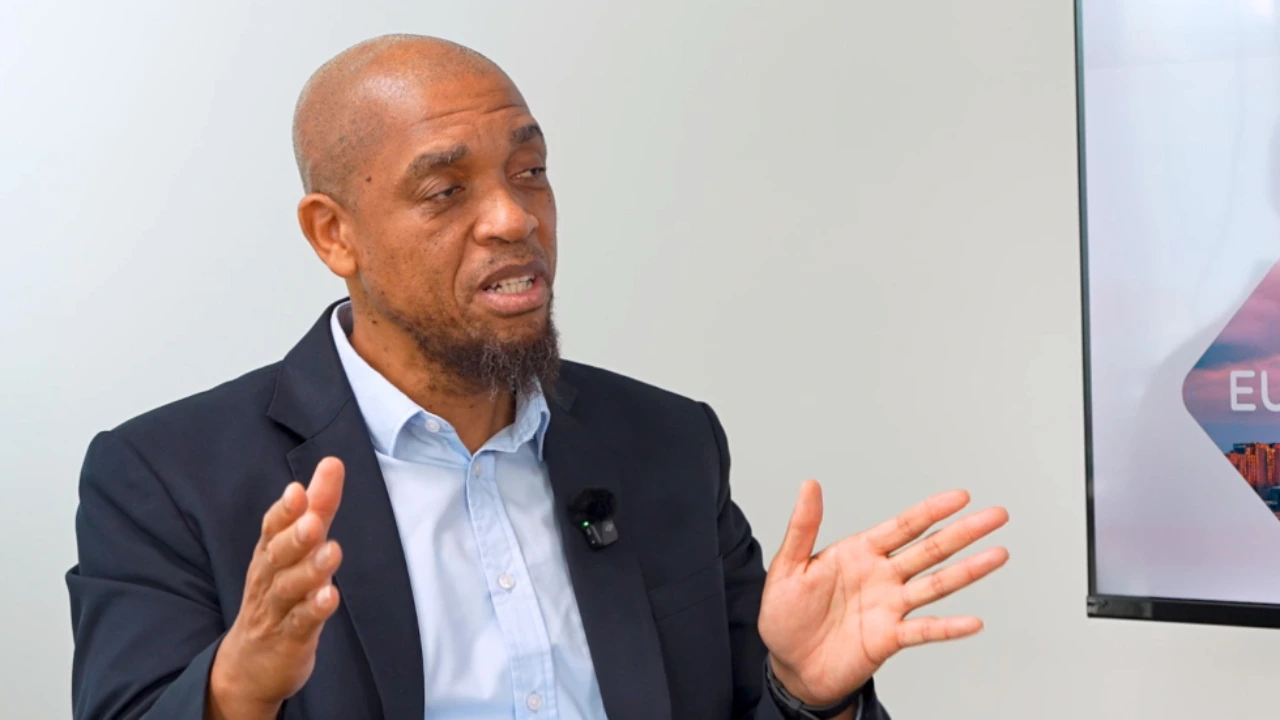
CEO of Data Tech International, Goran Todorov noticed this blind spot early. Not as a theorist or a bureaucrat, but as a student working behind the till. He sold cars, he sold fireworks, he worked in hospitality and construction. And everywhere he stood, he saw the same leakage. A transaction here, a skipped receipt there. At the end of the week, the money that should have travelled to the government had a habit of staying put. “It’s not something I consider normal,” he says now, speaking from the vantage point of two decades in the tax technology business.
That early discomfort planted something. Todorov, who went on to found Data Tech International and build its flagship product TaxCore, is not a typical chief executive. He does not talk like a salesman. He talks like someone who has watched the same problem unfold across five continents and decided that the only fix is to stop trusting people to do the right thing and start building a system where they have no other choice.
Key Interview Takeaways
- Tax fraud is a design problem. When a business can delete a transaction and nobody will ever know, some people will.
- The only honest tax system is one where the seller, the buyer and the government see the same receipt at the same time. Not weeks later. Not after reconciliation. At the exact moment the sale happens.
- The internet is not everywhere. Cyclones happen. Networks fail. A system that requires constant connectivity is a system that will break. The right solution works offline, stores encrypted sales locally, and syncs when the world comes back online.
- You do not need to raise tax rates to collect more. Fiji lowered its rate before implementing real‑time monitoring. Revenue still went up. The money was always there. It was just hiding.
- Artificial intelligence will not save you if your data is rotten. Every prediction, every risk score, every clever algorithm is garbage without a trusted digital fingerprint at the point of sale. First, secure the transaction. Then let the machines learn.
The Fog of the Sale
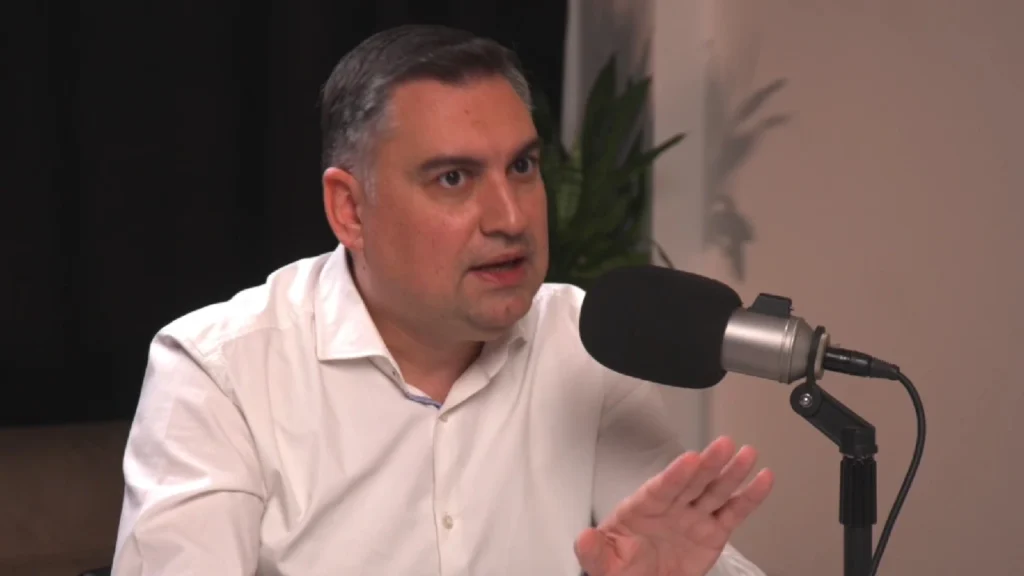
Here is the problem that TaxCore exists to solve. When you buy something, three parties have an interest in that transaction. You want proof of purchase. The business wants its revenue. The government wants its slice of value added tax or sales tax. But for most of modern commerce, those three records have lived separate lives. The business keeps its books. The government receives a summary weeks or months later. And the customer walks away with a piece of paper that might as well be a napkin. “Fraud lives in asymmetry. When the customer, the business, and the government each hold a different version of the same transaction, the system is already compromised”, DTI head confirmed.
That gap is where tax evaporates. A business can underreport sales. It can delete transactions from its electronic records. It can run two sets of books, one for the accountant and one for the taxman, and dare the authorities to catch the difference. In Sweden, before the country introduced fiscalization in 2008, authorities estimated that seventy percent of point-of-sale transactions went undeclared. The value added tax at the time stood at twenty five percent, the highest in Europe. The incentive to cheat was simply too strong.
An Engineering Problem?
Todorov saw this as an engineering problem. When governments do not trust businesses to report honestly, and customers cannot verify tax submission, the system must remove human discretion from the moment of sale entirely. And this exactly what TaxCore does! It adds a security layer to every transaction.
The point-of-sale system, whether a traditional till or a mobile phone, signs and encrypts the data at the exact moment the sale occurs. That encrypted package becomes immutable. It can only be decrypted by the tax authority. The business cannot go back and alter it. The customer can scan a QR code to verify that the receipt is real and that the information has reached the government. In this way, the system creates a tripod, three identical views of the same transaction—and ensures that any attempt to change one leaves a visible mark.
Tax Fraud Prevention: The Submarine Test
Furthermore, what makes this interesting, and what sets TaxCore apart from simpler monitoring systems, is that DTI designed it for a world where the internet does not always work. He likes to say that the system can handle a taxpayer selling hot dogs from a submarine. The point is serious. In Fiji, where TaxCore first went live as a commercial off the shelf solution, cyclones are a fact of life. In late 2010’s, a cyclone knocked out the main data centre. The back office went dark. But businesses continued operating. Their secure elements, either on premises or in the cloud but outside the affected data centre, kept signing transactions. Days later, when the centre came back online, everything reconciled. Not a single transaction was lost.
“By separating transaction integrity from central availability, we removed the authority as a point of failure, without removing it from control”, Todorov said.
That resilience matters more than most people realize. Tax authorities are terrified of becoming a single point of failure. If the government’s system goes down and businesses cannot process sales, the political blowback is immediate and brutal. So, most fiscalization efforts have proceeded cautiously, often badly. Todorov’s approach was to decouple the back office from the businesses entirely. Thus, The government can fail without stopping commerce. The data simply waits.
The Pacific Laboratory
Fiji was the first, but it was not the easiest. The country reduced its tax rate before implementing the system, a clever piece of sequencing that softened resistance from the business community. Collection went up anyway. The extra revenue came not from raising rates but from capturing what had always been missing. That is the magic of good tax technology. It does not need to punish anyone. It just needs to make cheating impossible.
Samoa followed, though not without drama. Todorov and his team arrived to run workshops and complete the implementation. Then Covid closed the borders. They were stranded for three extra months. During that time, they built the capacity of the Samoan Revenue Authority to run the system themselves. When a new government came in after the election, promising to abolish the Tax Invoice Monitoring System, the revenue authority pushed back. They had seen the data. Compliance had improved. Revenue had held steady even when the island was closed. The new minister was convinced. To this day, Todorov says, the Samoan authorities have not issued a single penalty. Taxpayers are complying voluntarily because the alternative is a system that leaves no room for argument.
There is a lesson there, one that transcends the Pacific. Good tax administration is not about enforcement. It is about eliminating the uncertainty. When the numbers tell the truth by themselves, nobody has to be the bad guy.
Tax Fraud Prevention: The Zapper and the Phantom
None of this would have been possible, Todorov acknowledges, without the academic work of Professor Richard Ainsworth from Boston University and his “fraudsters will only stop when they know there is a high probability they will be caught” approach. Ainsworth coined the terms “zapper” and “phantomware” to describe the software tools that dishonest businesses use to erase transactions from their electronic records. In the early days of computerised accounting, this was happening everywhere. People were silent about it. Ainsworth gave it a name and made it visible. New York State held public hearings. Washington State went further, making electronic sales suppression a criminal offence and requiring offenders to use monitoring systems during a probationary period. TaxCore became the tool they used.
That Washington State project was a turning point. It proved that the system could work not just in small Pacific island nations but in one of the most sophisticated tax jurisdictions in the world. It also proved something else. Tax authorities do not need to buy a solution that forces every business into a single proprietary ecosystem. TaxCore is an open standard. The technical specifications are published. Anyone could build a competing system, though Todorov notes that it would take a great deal of money and a great deal of effort. The important thing is that the government sets the standard and the market adapts. Businesses can keep using their existing point of sale software. They just have to connect it to the secure layer.
“Fraudsters don’t respond to regulation; they respond to risk. As Richard Ainsworth said, once the likelihood of being caught is high enough, behavior changes”, Todorov agreed with the professor’s approach.
The AI Revolution
What comes next is artificial intelligence, though Todorov is careful not to get carried away. TaxCore already uses machine learning to detect anomalies. But he warns that AI on bad data produces bad conclusions. The foundation has to be solid first. You cannot exercise tax fraud prevention if you cannot trust the underlying transactions. That is why the digital fingerprint matters. Every taxpayer receives a secure element, a kind of digital identity, that authenticates every sale. Lose it, and you can revoke it. Someone else cannot impersonate you. The system knows who issued each invoice from the moment it was created.
“We are moving from systems that store data to systems that understand it. The interface becomes simple, but the intelligence behind it becomes uncompromising”, Todorov concluded.
Over the next five to ten years, Todorov expects tax authorities around the world to continue experimenting. The European Union is moving toward VAT in the Digital Age, a concept that he and Ainsworth described in a 2013 paper about digital invoice customs exchange. Other countries are watching. But experimentation is not the same as adoption. The real challenge is political will and leadership. “The people in the public sector are not really motivated,” he says, with the frankness of someone who has tried to sell complex technology to dozens of governments. “They move very slowly. But every now and then you find a leader who wants to make a difference.”
Tax Fraud Prevention: The Peacemaker
Todorov resists the portrayal of himself as a visionary. He says the journey was never about money. If it had been, he would have gone bankrupt years ago. What kept him going was the observation that nobody else was offering this service to this particular customer. The tax authority had been left behind. The big technology firms were not interested. The consulting firms did not understand the engineering. So, a small company from Serbia, built around a man who had watched skimming happen from behind a cash register, carved out a space.
His objective now is simple. Equip a government with a tool and the capacity to operate it. Whether they use it on one taxpayer or a hundred thousand is up to them. The tool does not care. It just sits there, waiting to turn every sale into something transparent, efficient, and fair. That word, fairness, comes up repeatedly. Not fairness to the government. Fairness to the honest taxpayer who plays by the rules while watching competitors skim. Fairness for the customer who pays the tax and expects it to reach its proper destination. Fairness for businesses that should not be disrupted by clumsy enforcement.
In the end, Todorov says, TaxCore is a peacemaker. It reconciles the duty to collect with the effort to comply. It removes the question so that nobody has to ask it. And in a world where governments are desperate for revenue and citizens are desperate for trust, that might be the most valuable thing a piece of software can do.