
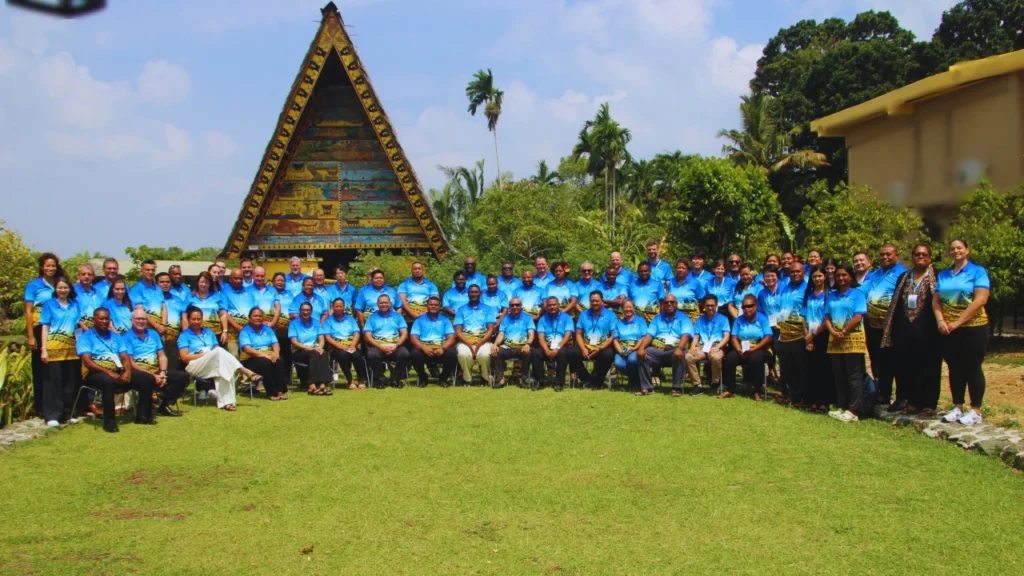
The Pacific does not do subdued revolutions. When tax administrators from sixteen island nations gather, the conversations tend to be practical, the stakes high and the humour on the sidelines sharp and on the spot. The 23rd Pacific Islands Tax Administrators Association Annual Heads Meeting (PITAA 2026), which opened in Koror, Palau, on 21 September 2026, confirmed as much.
Under the theme “Rising with the Tides: Anchoring Resilience in Revenue Administration through Risk Management, Technology, and Workforce Excellence,” the meeting brought together revenue chiefs, regional partners and a handful of technology firms that have spent years working the region rather than merely visiting it. Data Tech International was among the partners present. Its contribution centred on a straightforward question that still trips up many administrations: how do you turn growing volumes of data into earlier, better decisions?
“A tide is usually not one big wave. It is countless small movements, all going the same way. That is a good picture of PITAA. Some of us simply cannot build every system or train every capability alone. But together we can learn from each other, borrow what works, and warn each other about what doesn’t”, reflecting on the meeting theme, Palau’s Bureau of Revenue and Taxation director Elway Ikeda highlighted the value of cooperation among Pacific tax administrations.
Consequently, domestic revenue mobilization sits at the core of Pacific development. Without stronger local collections, governments remain tethered to external finance and the constraints that accompany it. PITAA 2026 served as a clear reminder that technology, applied with care, can help reduce that reliance.
5 Conclusions from PITAA 2026
- Data without trust is just noise. Volume means little until administrations can rely on quality, connect sources and turn information into early, usable signals.
- Digitalization works best as a continuous process, not a single project. Systems and analytics must evolve with institutional capacity and changing needs.
- Early risk identification outperforms late enforcement. Spotting issues while they remain manageable lets limited resources focus where they matter most and encourage compliance before problems grow.
- Regional experience compounds. Practical lessons from Fiji, Samoa, Vanuatu, Papua New Guinea and Tonga already shape better tools. PITAA remains the key forum for sharing and refining them.
- Domestic revenue mobilization is the unglamorous essential. Stronger local collections, supported by trusted data and sharper risk tools, give Pacific governments more room to set their own priorities.
Digital Anchors at PITAA 2026
One of the meeting’s core strands, “Digital Anchors: Leveraging Technology and Data Analytics for Revenue Intelligence,” sat squarely in familiar territory for Data Tech International. Ivan Pavlović, chief technology officer, and Maja Miodragović Kecojević, account manager, presented “Revenue Intelligence in Practice: Harnessing Data Analytics and Third-Party Information for Smarter Tax Administration.”
Our message was thoughtfully unglamorous, but unique in its core. Collecting more data is easy. Trusting it, connecting it and turning it into signals that tax officers can act on is harder. The presentation traced the path from a single fiscal transaction through validation, integration with internal and third-party systems, and finally to the analytical layer that helps administrations spot risk before it becomes an enforcement case.
More data does not automatically equal more intelligence. That simple observation landed with the force of the obvious. In a region where resources are finite and distances vast, the ability to prioritize matters more than the ability to store yet another worksheet.

From Transactions to Timely Insight
The Pacific has watched several waves of digitalization. Some arrived as large, one-off projects that struggled to keep pace with changing needs. Data Tech International’s approach, shaped by years of work in Fiji, Samoa, Vanuatu, Papua New Guinea and Tonga, treats digitalization as a continuous process rather than a single installation. Systems, integrations and analytical tools evolve alongside the administrations that use them.
At PITAA 2026 the company pointed out a shift already under way in several of those jurisdictions. Technology is moving from a passive recorder of what has already happened to an active helper that identifies emerging risks, focuses limited audit capacity and, where possible, steers taxpayers toward compliance before problems grow.
Accordingly, Ivan Pavlovic put it plainly: “The Pacific is not simply a region where we do business. It is a region where, for many years, we have been working alongside tax administrations to build and continuously improve practical solutions, as partners. What we learn through each of these engagements helps shape the next generation of our solutions. PITAA gives us an opportunity to share that experience, but more importantly, to listen to the region’s needs and discuss the next step together: how we can turn trusted transaction data into better, more timely decisions for tax administrations.”
PITAA 2026: A Meeting of Practical Minds
The value of PITAA 2026 lay as much in the corridors as in the formal sessions. Administrations at different stages of digital maturity compared notes. Those further along the road described the unexpected benefits of reliable third-party data. Those earlier in the journey asked the hard questions about data quality, institutional capacity and the risk of building systems that outrun the people who must run them.
Data Tech International used the occasion to reconnect with long-standing partners and to hear, unfiltered, the priorities defining the next phase of revenue administration across the Pacific. And definitely, the emphasis on risk management, technology and workforce excellence felt less like a conference motto and more like a true working agenda.
For a company whose presence in the region has grown steadily rather than dramatically, the meeting offered confirmation that patient, iterative work continues to matter. Domestic revenue mobilization is rarely glamorous. It is, however, essential. Better data, better trust in that data and better tools for using it remain among the most practical contributions technology can make.
Looking Beyond the Horizon
We close participation at PITAA 2026 with our humble thanks to the Secretariat, the Bureau of Revenue & Taxation of Palau and the participating administrations. The gratitude is genuine. The Pacific tax community is small enough that real relationships still count, and large enough that shared problems benefit from shared solutions.
The tides will keep rising. Climate pressures, economic shifts and the ordinary demands of public services will not wait for perfect systems. What PITAA 2026 demonstrated is that a growing number of Pacific administrations are determined to meet those pressures with better information, sharper risk focus and technology that serves the tax officer rather than the other way round.
Data Tech International leaves Palau with the same steady conviction it brought: the work continues, country by country, integration by integration, insight by insight. In a region where every dollar of domestic revenue counts, that measured approach may prove the most useful of all.